
The Inversion
When the prophecy becomes the prison

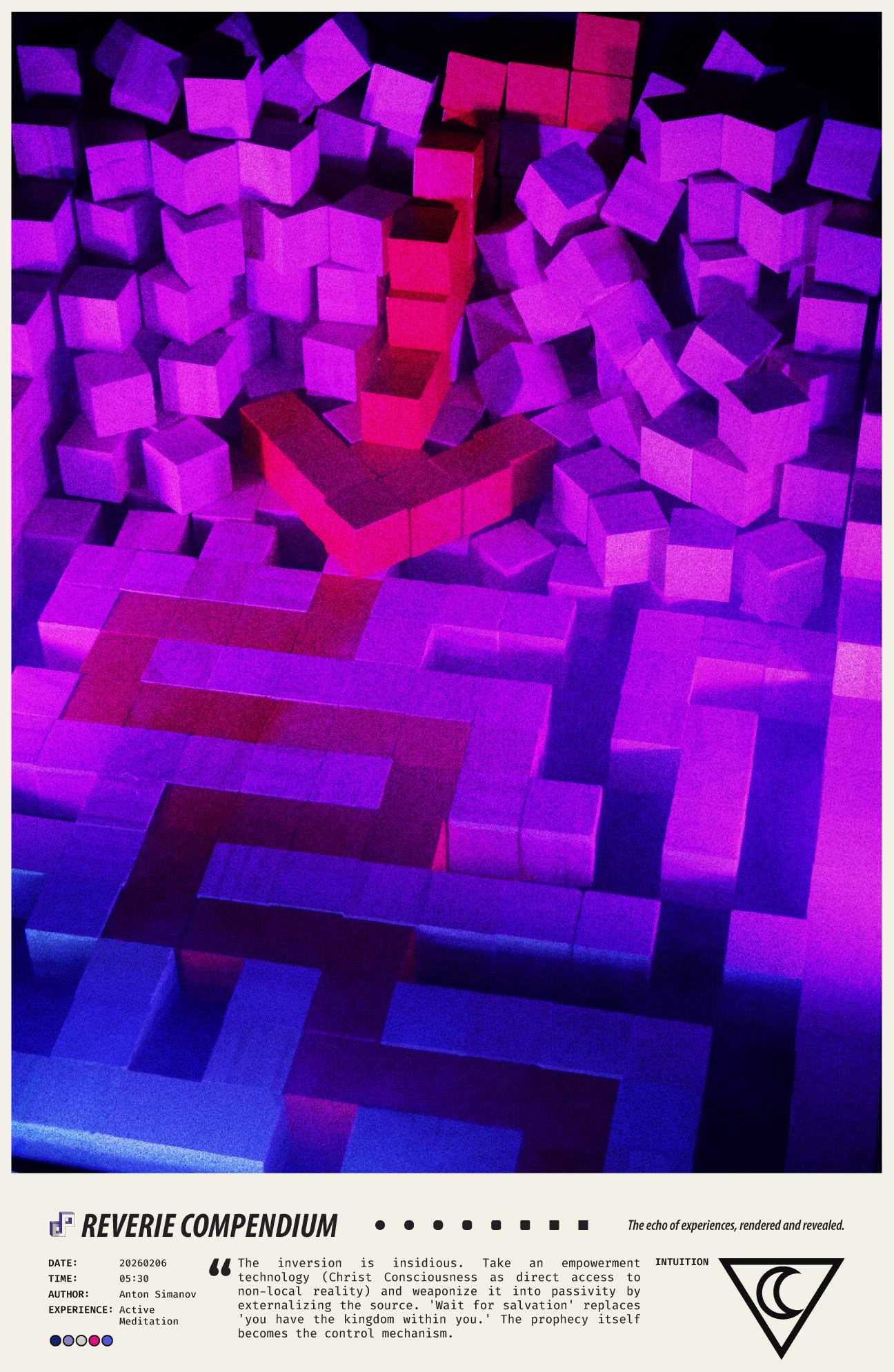
The inversion is insidious. Take an empowerment technology (Christ Consciousness as direct access to non-local reality) and weaponize it into passivity by externalizing the source. ‘Wait for salvation’ replaces ‘you have the kingdom within you.’ The prophecy itself becomes the control mechanism.
No One Is Coming

The most dangerous prophecy doesn’t fail to come true—it’s specifically designed to keep you waiting forever. When you convince people that salvation comes from outside, that they need to wait for someone else to fix things, to save them, to reveal truth, you’ve built the perfect control system. One that runs on hope turned into passivity.
The Inversion
The maze isn’t merely a puzzle; in our case, it’s a control system disguised as a path. People move through its corridors, believing progress is being made, waiting for the right turn to reveal salvation. But the structure itself is the trap: circular waiting weaponized into passivity.
This composition can be read two ways. First, as institutional capture: systems that promise to guide you toward truth while keeping you perpetually dependent on their mediation. The prophecy that never arrives becomes the mechanism—“wait for salvation” replacing “you have the kingdom within you.” Second, as the moment of recognition and escape: the red path breaking free, moving inward toward direct knowing rather than outward toward external authority.
The scattered cubes above represent what happens when the inversion is recognized—when empowerment technology (direct access to non-local reality) is reclaimed from the structures that weaponized it into dependency. They’ve left the maze entirely.
The prophecy itself was the control mechanism. The gift was never the promise of return—it was realization of the Kingdom Within.
Process Documentation
What can I say, I just really love playing with wood blocks these days.

The illustration isn’t crisp and clean like the process documentation you’ll find below. I continue to experiment with the noise texture and compression to fine-tune my “qualia” treatment of the work.
When initially thinking about illustrations fit for Percept Index, that was always the baseline goal: to continuously develop dream-like, thought-light, memory-inspired atmosphere that can be applied to all Reverie Compendium work. It didn’t start out exactly like that, but the nature of my process is continuous and incremental improvement; otherwise, I’d be stuck “developing” process and never get anything done.
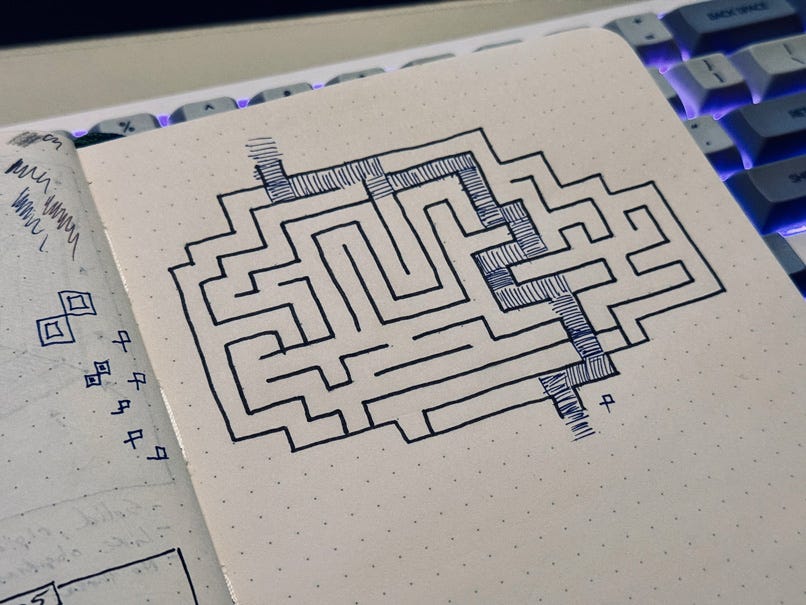
Initially started out as a basic idea and a sketch, as usual.
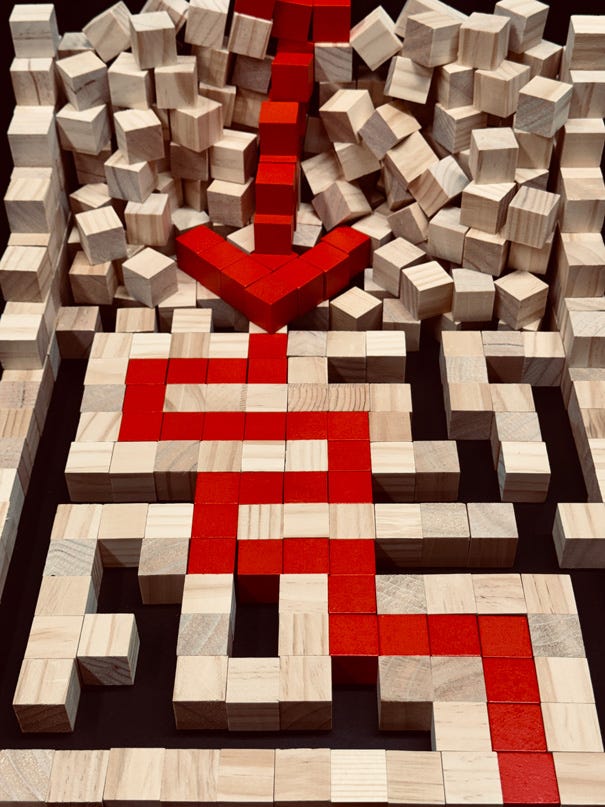
I made sure to include this initial version of the maze because there’s a completely unintentional message in it (bottom-left).

Many angles were considered. I do like the depth here, maybe a tactic for a future illustration.
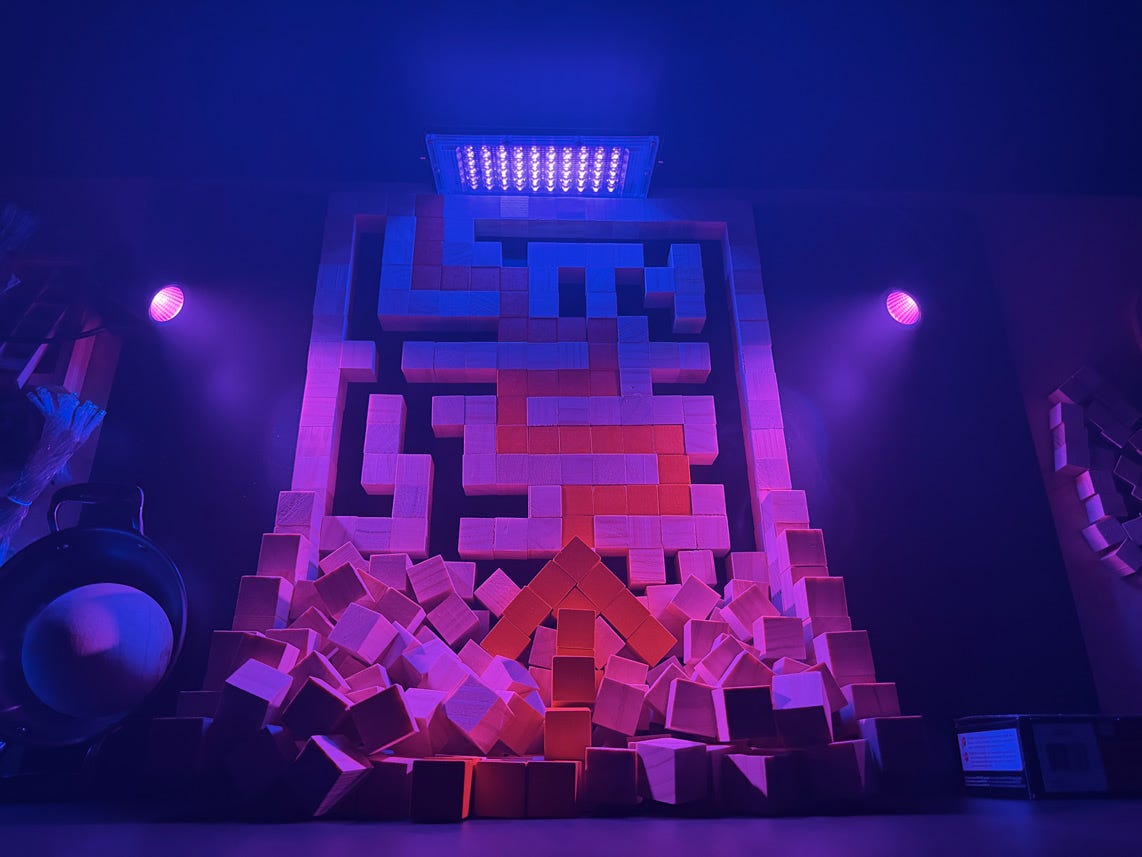
Played around with completely flipping the composition but ultimately decided that this wasn’t working.
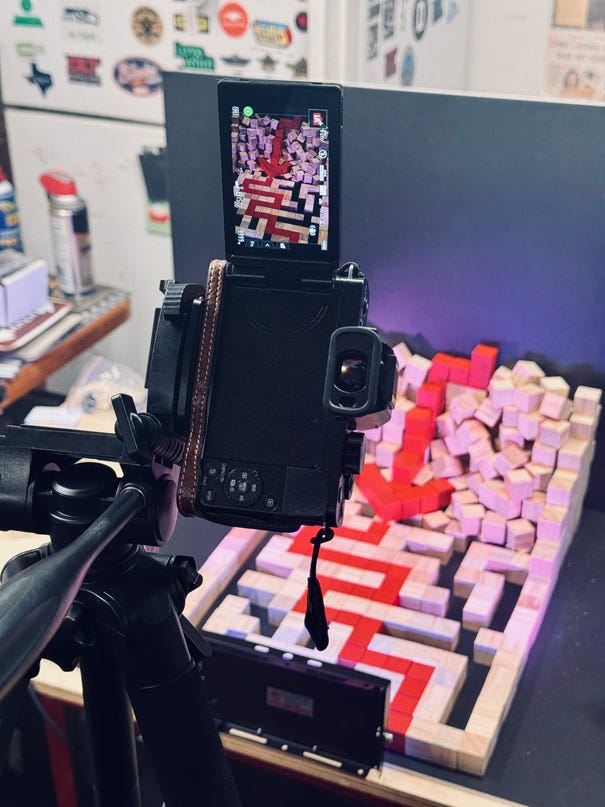
The Panasonic LUMIX G100D is underrated because marketing really messed up the launch. Love this pocket beast.
Part of my continuing work on Percept Index, where I document and illustrate my experiences with lucidity, awareness, and perception.